GAC Protective Solutions, powered by AKE, says it has entered into two new strategic partnerships with the innovators of anti-piracy technologies to help protect vessels, cargo and seafarers: Unifire's SeaSerpent Anti-Pirate Water Cannon System and Intelligent Engineering's (IE) SPS Citadel Access Protection.
Unifire's SeaSerpent Water Cannon System is a unique, non-lethal protective measure using high-volume, remote control water cannons to rapidly flood pirate skiffs. By delivering a jet of up to 80 litres of water per second from a range of 80 metres, the flooding of the pirate vessel both prevents boarding and inhibits the use of firearms, says the press release. The system can be controlled from the bridge or citadel.
With crew safety paramount for vessel owners and operators, Intelligent Engineering's SPS Citadel Access Protection uses Sandwich Plate System (SPS) to reinforce ship citadels to ensure that even the most determined hijacker cannot gain access. SPS is a composite material that delivers high strength, impact resistance and enhanced rigidity as a robust alternative to conventional stiffened steel structures. SPS Citadel Access Protection panels significantly enhance crew security, are simple to install on new builds or existing vessels and can be deployed within 90 seconds per doorway.
GAC Solutions vice president Christer Sjodoff said one benefit was that the system would save money on piracy insurance.
"We believe that non-lethal protective measures should remain the starting point for shipowners and operators as part of a proactive, integrated and intelligent approach to assessing, monitoring, training for and protecting against the threat of piracy," he said.
Source Shipping Gazette - Daily Shipping News
FNC Group, an international freight forwarders association, is to stage the eighth International Freight Forwarders conference in Harbour Grand hotel, Hong Kong on June 15-17.
The conference will showcase all types of industrial transport facilities, customs services, materials handling machinery an expected 200 international participants from various countries.
During the conference one and a half days will be dedicated to one-to-one meetings for delegates benefiting from FNC's background of supporting up to 160 partners worldwide.
To register visit http://www.fnc-group.com .
Source Shipping Gazette - Daily Shipping News
THE 36th TOC Container Supply Chain Europe conference is being held this year at the Antwerp Expo June 12-14.
Focusing on the conference theme "Reliability, Capacity and Efficiency", the event brings together shippers, 3PLs, carriers, transport companies and port and terminal providers to debate the outlook for global container supply chain operations.
The event includes a two days of high-level container supply chain talks, a free-to-attend port operations and technology seminars, a major exhibition of port and terminal services, equipment and technology and industry networking receptions.
Jochen Gutschmidt, transport procurement chief for Nestle, is among the speakers. He will be joined by Exxon Mobil cargo manager Raf Cornelissen, Marks and Spencer logistics chief Jason Keegan, Kuehne + Nagel sea freight senior vice president Peder Winther, MOL vice president (Asia-Europe West Africa) Stanley Smulders and Zim's corporate customer vice president Nissim Yochai.
Source Shipping Gazette - Daily Shipping News
The number of registered vehicles rose by 44.2% in March this year in Kazakhstan, the press service of the Statistics Agency announced.
According to the Statistics Agency, 46,282 passenger cars were registered in March 2012 in Kazakhstan, what is 44.2% more than in the corresponding period of 2011.
Totally as of April 1, 2012 availability of passenger cars amounted to 3,549.5 units.
Central Asian News Service, en.ca-news.org
THE International Air Transport Association (IATA) announced that Michael Vorwerk has resigned and will end his term as president of Cargo Network Services Corporation (CNS), an IATA company, effective July 31.
At the same time, Mr Vorwerk will also be leaving his concurrent posting as executive director of Cargo 2000 (C2K) which is an IATA special interest group.
Mr Vorwerk has led CNS and C2K since 2009 while on a four-year secondment from Lufthansa Cargo. He will be returning to Lufthansa Cargo to take up new duties as director sales development Germany and board representative for Air Cargo Gateway Frankfurt.
"I thank Michael for this three-and-half years of leadership contributions to the success of CNS and C2K. During that time he has enhanced the stakeholder relationships in both groups to hit many challenging targets in very difficult economic times. We wish Michael well in his future role. Michael leaves behind big shoes to fill. We will be announcing a succession plan in the coming weeks," said Des Vertannes, IATA's global head of cargo.
Shipping Gazette - Daily Shipping News
MEMPHIS based FedEx Corp has signed an agreement to buy French business-to-business express company Taxtex to enhance the firm's operations in Europe, just as Atlanta-based United Parcel Service (UPS) is to deploy its new holding, the TNT Express in a battle for market share..
FedEx has been steadily broadening its European network and announced plans one month ago to acquire Opek Sp.z o.o., a Polish shipping company.
The UPS acquisition of TNT meant that Germany's DHL was not longer the biggest express delivery company in Europe, according to the International Express Parcels 2012 report. The TNT buyout acquisition also left FedEx a distant third.
But FedEx came back punching. "This acquisition shows we are continuing to systematically and strategically invest in growing our network," said the FedEx statement.
"The Tatex business complements FedEx's existing operations in the French market, and will enable the company to provide additional local services in one of Europe's largest geographies, to its customers around the world."
The FedEx acquisition plans follow the company's purchase of ANC Holdings Limited, a British domestic express company in 2006 and of its Hungarian service provider, Flying Cargo Hungary in 2007.
Between October 2011 and the end of May 2012, FedEx will have opened 38 new stations across Europe, including 19 in France. The company has also invested in expanding its air fleet to provide an additional five B757s on intra-European routes, and another B777 for long-haul routes, bringing the total number of B777s operating FedEx routes in and out of Europe to four.
Also, the company said "its FedEx Trade Networks has greatly expanded its presence in Europe, including three new locations in France, adding 22 locations in recent years to complement the portfolio of express services."
Meanwhile UK-based Ceva Logistics, 91.3 per cent owned by Apollo Global Management LLC, has filed with US Securities and Exchange Commission to raise US$400 million in an initial public offering of common stock, Reuters reported.
CEVA, the world's second biggest non-asset based supply chain management company, told regulators in a prospectus that it would list on the New York Stock Exchange under the symbol "CEVL."
Reuters noted that IPOs in the logistics industry were picking up after a long absence. Linc Logistics, which first filed for an IPO in June 2010, renewed its IPO bid earlier this month.
Apollo bought the logistics division of Netherlands-based TNT, the predecessor of Dutch global express company, TNT Express, in 2006 for $1.9 billion and renamed it Ceva. In 2007, Ceva bought Houston-based freight management group EGL Inc for $2 billion.
Shipping Gazette - Daily Shipping News
AIR CARGO dependent forwarding giant Kintetsu World Express (KWE) has posted a record 2011 net profit increase of 21.1 per cent to US$119.31 million, drawn on revenues of $3.31 billion, down 1.2 per cent.
Air cargo volume, on which KWE relies, fell because of last year's March earthquake and tsunami as well as a decline in global demand for such products as flat-panel televisions and personal computers, although its sea freight services grew moderately.
KWE said air freight operations were sluggish, but it engaged in severe cost-cutting, such as closing or merging offices. Operating profit increased 16.2 per cent to $172.80 million.
Fiscal 2011 Americas revenue fell 0.8 per cent in fiscal 2011 from a year earlier to $407.34 million. Operating profit in the Americas fell 8.6 per cent to $26.59 million.
Tokyo-based KWE ranks behind Nippon Express Co and Yusen Logistics, Japan's big three international freight forwarders.
"The global economy was lacklustre because of growing concerns about a recession amid the widening debt crisis in Europe and signs that growth in such emerging economies as China and India was slowing," said the KWE statement accompanying the financial results.
"Japan's economic outlook grew uncertain, including the effects of the earthquake and floods in Thailand, a slump in overseas demand and the prolonged appreciation of the yen. But the Japanese economy began to recover gradually in the second half of the last fiscal year," the statement said.
Shipping Gazette - Daily Shipping News
2012-05-14
We all know that industry events showcase the latest innovations and offer professionals a place to exchange ideas, but this year's RORO is set to offer even more.
The organisers of RORO – the only event dedicated to the ro-ro industry – have announced that visitors will have the chance to take part in an exclusive guided tour of the Älvsborg Ro/Ro port and APM Terminals Gothenburg – two of the most important operations in the region, at the largest port in Scandinavia.
Industry professionals will descend on Gothenburg for RORO from 22 – 24 May, where visitors will be able to source the latest solutions, hear from leading industry figures during a new free-to-attend conference and also see how two of the region's leading terminals are operating, all in one location.
Organised by the Port of Gothenburg, on day 3, visitors will be guided through the various terminal operations, as well as its logistic centres, whilst representatives from the ports will be on hand to discuss current performance and the developments that are on the horizon.
On the exhibition floor, Alfa Laval and Wärtsilä are just two of a number of companies that will be revealing new solutions for the industry. Alfa Laval recently announced that it will be showcasing a new solution that removes sulphur oxides from the ship’s exhaust gas by scrubbing it with seawater or fresh water while Wärtsilä will present their new low-speed engine after successfully passing factory acceptance tests in Europe and China.
Meanwhile, during a free-to-attend conference, Per Westling, Managing Director of Stena RoRo, Mike Garratt, Managing Director of MDS Transmodal, Arild Iversen, CEO of Wallenius Wilhelmsen Logistics, Dr Gernot Tesch, Managing Director of Scandlines Deutschland, Åsa Wilske, Environmental Manager at the Port of Gothenburg and Mårten Carlquist, CEO of North Sea RoRo, will offer their perspectives on the future of the ro-ro industry. They are set to discuss business operations, the environment and market trends.
Sophie Ahmed, Event Director of RORO, commented: “We believe that this year's RORO event offers visitors a unique experience. Our conference programme, sponsored by Stena RoRo, covers all of the most pertinent issues affecting the ro-ro industry, whilst the exhibition provides a perfect opportunity to source new products and services. In addition, the port tour will allow industry professionals to look behind the scenes at how two of the most successful terminals in Europe operate.
“At a time when efficiency and productivity are paramount, the Port of Gothenburg tour will provide visitors with an unrivalled opportunity to see inside the workings of a world leading port. With the event only weeks away, we're looking forward to welcoming the industry to Gothenburg for what will be the best RORO event yet.”
For further information about RORO, please visit www.roroex.com
Storm Communications Ltd
The container ship AS Scotia already meets the requirements of the Ship Energy Efficiency Management Plan (SEEMP), which will become compulsory as of 1 January 2013. The SEEMP has been adopted by the IMO as a mechanism for vessels to improve their operational energy efficiency, thereby lowering CO2 emissions.
Ahrenkiel Shipmanagement was presented with a "Preliminary Energy Efficiency Certificate" for the AS Scotia, the first issued to a GL classed vessel. From 2013, all seagoing vessels larger than 400 gross tonnage must carry on board a SEEMP, a management plan for the ship's energy efficiency, according to MARPOL, Annex VI.
Germanischer Lloyd has reviewed the content of the energy-efficiency plan for the AS Scotia and has checked to see if it is on board. Captain Christian Suhr, Managing Director of Ahrenkiel Shipmanagement, and Wolfgang Kempke, Environmental Fleet Manager for Ahrenkiel Shipmanagement, accepted the certificate from Kai Fock, Business Development Manager for GL, and Dr Fabian Kock, Head of the Environmental Certification Department at GL.
The "Preliminary Energy Efficiency Certificate", which can be converted into an International Energy Efficiency Certificate (IEEC) in 2013, was issued by the German Flag State; the shipping company also received a SEEMP Statement of Compliance from Germanischer Lloyd.
"Increasing the efficiency of our ships is a pillar of our climate policy and a positive step - both in terms of the environment as well as for the competitiveness of our fleet," explains Christian Suhr. "That's why we decided early on to introduce the SEEMP and to share our experience with classification societies and other shipping companies.
We view the awarding of the International Energy Efficiency Certificate as confirmation of our environmental strategy."
Some of the measures which have been used to improve the energy efficiency of the AS Scotia include: a routing assistance system, speed optimisation (super slow steaming), a modern coating for the ship's hull, the use of energy-saving lamps and a video training programme for the crew on how to save energy.
"The AS Scotia has already fulfilled the requirements of the International Energy Efficiency Certificate," explained GL's Kai Fock.
"The shipping company has also had GL review the content of the vessel's SEEMP. It conforms to the requirements laid out in the IMO guideline, which we confirm by means of the certificate. The document itself was checked as well as the responsibilities and the processes in the management plan on site at the shipping company."
As of 1 January 2013: SEEMP and EEDI
The International Maritime Organization (IMO) decided to adopt the SEEMP as a requirement for both newly built and existing ships during its MEPC
62 environmental committee meeting in July 2011. The SEEMP brings a number of measures together which can contribute to reducing fuel consumption. The requirements of the SEEMP are set forth in resolution
MEPC.213(63): "2012 Guidelines for the Development of a Ship Energy Efficiency Management Plan (SEEMP)". A SEEMP and, for many types of cargo ships with a building contract date after 1 January 2013, the Energy Efficiency Design Index (EEDI), will be required to obtain the new International Energy Efficiency Certificate (IEEC).
As the IEEC can first be issued on 1 January 2013, ship owners who request certification to the new standards before this date are issued with a "Preliminary Energy Efficiency Certificate" or "Energy Efficiency Statement of Compliance", which attests to compliance with the standard.
This preliminary certificate will be converted into a IEEC in 2013.
The SEEMP was adopted as part of Annex VI of the International Convention for the Prevention of Pollution by Ships (MARPOL, Annex VI), which primarily regulates ship air emissions. "This international regulation calls for some 50,000 ships worldwide to be equipped with a SEEMP by 1 January 2013 and for the management plan to be maintained on board," explains Kai Fock.
GL Group
The first Airbus A320, registration SP-ABK, owned by Bingo Airways touched down at Warsaw Chopin Airport on Sunday 13 May, completing its so-called delivery flight from Southend, Great Britain.
Made in 2003, Bingo Airways first jet, no. MSN 2118, had previously been operated by Turkish airline IZair. Last Sunday, it was flown by Cpt. Maciej Gościński, Bingo Airways chief pilot instructor.
Bingo Airways is a new Polish charter carrier, which has only just begun commercial operations. The airline will offer flights from Warsaw, Katowice and Poznań to Antalya and Bodrum, Turkey; Enfidha, Tunisia; Rhodes, as well as Sharm el-Sheikh, Marsa Alam and Hurghada, Egypt, among other destinations.
Bingo plans to add two more Airbus A320 aircraft to its fleet already before the summer. The airline expects to carry a total of over 300,000 passengers by the end of 2012.
Source Warsaw Chopin Airport
2012-05-14
The delegation of Tajikistan participated in the XI meeting of the Transport Sector Coordinating Committee of the Central Asia Regional Economic Cooperation (CAREC), CA-News was told at the Ministry of Transport of the Republic on Monday.
"Deputy Minister of Transport of the Republic Khudoyor Khudoyorov represented Tajikistan at the meeting," said the Ministry.
The Coordinating Committee directs the process of strategic decision-making and planning for all investments related to transport.
The Committee regularly reports and prepares recommendations for the meeting of senior officials of CAREC, who in turn inform the ministerial conference of CAREC. Committee meetings are held at least once a year.
The CAREC program is a proactive facilitator of cooperation on the basis of projects in transport, trade, energy and other key sectors of mutual interest. This is a partnership of 10 countries (Afghanistan, Azerbaijan, China, Kazakhstan, Kyrgyzstan, Mongolia, Pakistan, Tajikistan, Turkmenistan and Uzbekistan) and six multilateral institutions (Asian Development Bank, European Bank for Reconstruction and Development, International Monetary Fund, Islamic Development Bank, UNDP and World Bank).
ADB acts as a secretariat for CAREC.
Central Asian News Service, en.ca-news.org
The Marine Stewardship Council’s sustainable seafood finder mobile app has passed 500 downloads, less than a month after its official launch. The app, which helps shoppers search for certified sustainable seafood on the go, links shoppers to businesses that use the MSC ecolabel on packaging.
Project manager, Andrew Bowman says: “This is a fantastic response that shows there’s a genuine interest from the public in mobile-based, up-to-date information about where they can buy MSC certified sustainable seafood. As well as helping shoppers to make an informed choice about their fish, the app promotes our partners’ commitment to sustainable sourcing and keeps these interested, engaged shoppers informed about the latest developments in the sustainable fisheries that supply the products.”
MSC
ASIA-Europe spot rates fell six per cent last week to US$1,818 per TEU as all major trade lanes saw rates decline, according to the latest Shanghai Containerised Freight Index (SCFI).
The decline marks the biggest week-to-week contraction in rates on the trade since November 11 when they fell 6.5 per cent. The key difference is that rates were then just $573 per TEU. Now they are just shy of $2,000.
The second largest fall for the week came on the Asia-Mediterranean trade as spot rates dropped 4.9 per cent to $1,934 per TEU.
After rate hikes on the US trades last week, they slipped again last week. Asia-US west coast rates were down 0.8 per cent to $2,393 per FEU and down 1.1 per cent to $3,541 per FEU on the Asia-US east coast run.
Across all trades the index contracted 2.4 per cent to 1,464.82 points.
Shipping Gazette - Daily Shipping News
DA CHAN BAY Terminal One, the newest container terminal in West Shenzhen, is now receiving first calls from the South China East Coast service (SCE 2) operated by Grand Alliance (Hapag-Lloyd, NYK, OOCL, HMM and Zim) again from May 12 as the transpacific peak season approaches.
The SCE 2 will call at the Modern Terminals Ltd operated terminal every Saturday, following a port rotation of Busan, Shanghai, Xiamen, Shenzhen-Da Chan Bay, Hong Kong, Shenzhen-Yantian, Panama Canal, Manzanillo, Kingston, Savannah, Charleston, Kingston, Manzanillo, Panama Canal and back to Busan, deploying nine ships in the 4,600-5,000-TEU range.
Da Chan Bay Terminal One (DCB) is a new international container terminal serving the Pan-Pearl River Delta cargo catchment areas. DCB covers an area of 112 hectares with five berths along its quay of 1,830 metres long and 600 metres wide. The depth is to be dredged to 18 metres from its current 15.5 metres to accommodate larger containerships.
Shipping Gazette - Daily Shipping News
CHILE's main ocean carrier, CSAV, the world's 20th largest, posted a widening first quarter net loss of US$202.9 million against the $182 million lost in the first three months of last year.
But its EBIT (earnings before interest and tax) operating loss was smaller at $175.3 million than the $197.3 million lost in the first three months of the previous year.
The carrier handled 499,800 TEU in the first three months, down 43 per cent. Its average freight rates were up 5.3 per cent to $1,684 per TEU in the same period.
"If discontinued operations are ignored," said London's Containerisation International, "the net loss in first quarter would have only reached $175.6 million, ie, slightly down on its loss in the same period of last year."
Shipping Gazette - Daily Shipping News


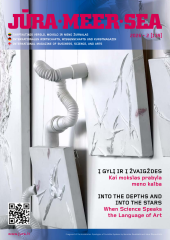




The magazine SEA has been published since 1935
International business magazine JŪRA MOPE SEA has been published since 1999
The first magazine in Eurasia in the four languages: English, Chinese, Russian and Lithuanian


|
|